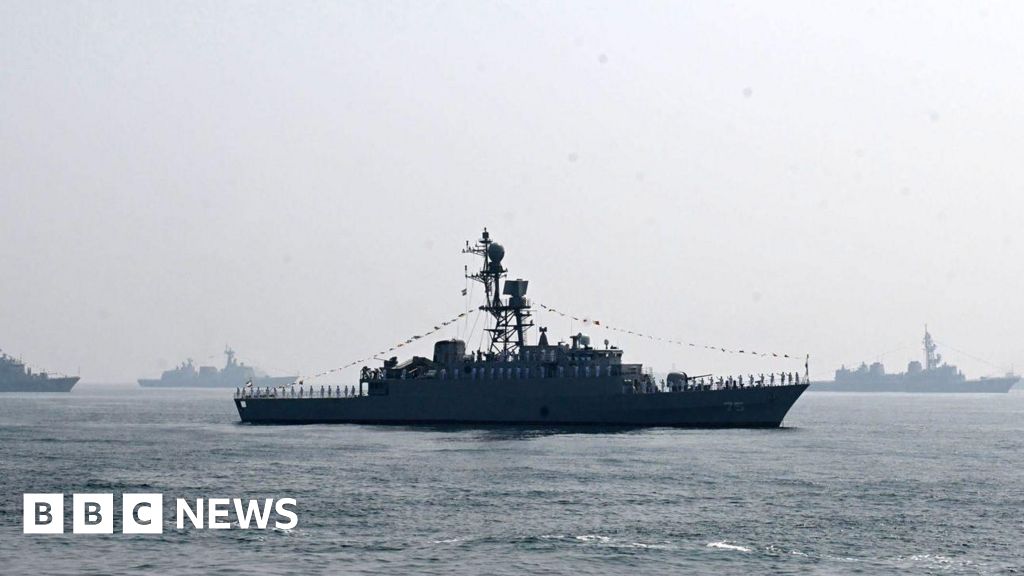
Iranian Warship Seeks Refuge in India Amidst Regional Tensions
The tranquil waters of Kochi, a significant port city on India's southwestern coast, recently became an unexpected focal point in a brewing international crisis. The arrival of the Iranian Navy vessel, IRIS Lavan, seeking urgent technical assistance, has cast a spotlight on the volatile geopolitical landscape and India's intricate role in navigating it. This incident, involving an `iranian warship India`, is far from a routine port call; it unfolds against a backdrop of escalating tensions between Iran, Israel, and the United States, transforming a seemingly technical issue into a nuanced diplomatic challenge for New Delhi.
On February 28, 2026, the Iranian government formally requested permission for the IRIS Lavan to dock in Kochi, citing "severe technical issues" while operating in the Indian Ocean Region (IOR). India swiftly granted approval on March 1, demonstrating its commitment to humanitarian aid and maritime safety, even as global powers watch closely. This unscheduled stop, however, highlights the dual nature of maritime relations between India and Iran, contrasting sharply with previous goodwill visits that celebrated naval cooperation and strengthened bilateral ties.
The IRIS Lavan's Unexpected Stop in Kochi: A Closer Look
The saga of the IRIS Lavan in Kochi is layered with strategic implications. The vessel itself is a Landing Ship Heavy, a type crucial for logistical support and power projection. Its presence in the Indian Ocean, and particularly its need for emergency repairs, underscores the operational challenges faced by navies in vast maritime theaters. For Iran, such vessels are vital for maintaining a presence far from its shores, delivering supplies, and potentially acting as forward bases.
While Iranian officials maintain the docking is solely due to mechanical failure, the timing has undoubtedly raised eyebrows in international circles. This incident follows closely on the heels of another significant event: the reported sinking of another Iranian vessel, the IRIS Dena, by a U.S. submarine off the coast of Sri Lanka. Indian officials have been quick to assert that the Lavan's predicament is unrelated to the Dena's fate. Nevertheless, the proximity of these events paints a picture of heightened naval activity and potential vulnerability for Iranian assets in the region.
India's decision to provide assistance to the `iranian warship India` is a testament to its long-standing policy of humanitarian aid at sea. Yet, the nation finds itself walking a diplomatic tightrope. Providing succor to an Iranian military vessel, especially a strategic one, carries implications for its relationships with Western allies and Israel, who view Iran's regional activities with deep suspicion. The port of Kochi, for now, remains an unlikely but pivotal stage for this complex international drama.
India's Diplomatic Tightrope: Balancing Act in the Indian Ocean
India's foreign policy has long been characterized by strategic autonomy, seeking to maintain good relations with all major powers without aligning exclusively with any single bloc. The incident involving the IRIS Lavan severely tests this principle, forcing India to navigate a delicate balance between its commitment to humanitarian principles and its complex geopolitical interests. On one hand, India values its historical and economic ties with Iran, including significant energy imports and shared regional interests. This relationship has manifested in numerous instances of cooperation, including planned naval visits aimed at enhancing maritime security.
The Indian Ocean Region, a vital artery for global trade and energy flows, has witnessed increasing militarization and competition for influence. India, as a significant littoral state, is keen to maintain stability and freedom of navigation. Providing assistance to an `iranian warship India` for genuine distress is consistent with international maritime law and India's humanitarian ethos. However, the political context complicates this simple act of aid. Western powers might view such assistance through the prism of their rivalry with Iran, potentially raising concerns about India's neutrality or its stance on regional conflicts.
For a deeper dive into how India navigates these complex relationships, particularly contrasting this emergency docking with more collaborative efforts, explore our article on
Iranian Warships Boost India-Iran Naval Ties in Mumbai Visit. This resource highlights the various facets of India's maritime diplomacy, showcasing how it balances cooperation with the necessity of independent decision-making in times of crisis.
Beyond Technical Glitches: Geopolitical Undercurrents and Naval Strategy
The very nature of the IRIS Lavan's visit – an unscheduled, urgent request – sets it apart from typical naval exchanges. While "severe technical issues" are the stated reason, the geopolitical backdrop cannot be ignored. The potential use of a Landing Ship Heavy like the Lavan as a forward base or for logistical support lends strategic weight to its presence in the IOR. Its temporary disablement and subsequent repair in an Indian port could be interpreted in various ways by different actors.
Consider the ripple effects: a disabled `iranian warship India` in port potentially exposes vulnerabilities in Iran's naval capabilities, while its repair allows for continued operations. For India, understanding the broader context of Iran's naval strategy and its own response to such complex scenarios is crucial. The IOR is not merely a transit zone; it's a domain where naval power projection, intelligence gathering, and deterrence play out daily. The potential for miscalculation, especially when multiple state and non-state actors are present, is a constant concern.
Port calls, even emergency ones, are critical elements of naval diplomacy and operational sustainment. They allow for resupply, critical repairs, crew rest, and can serve as powerful diplomatic signals. The presence of the IRIS Lavan in Kochi, while a technical necessity, inadvertently becomes a symbol of the fluid dynamics in the region.
The Dual Nature of India-Iran Maritime Relations
The IRIS Lavan itself is a fascinating thread connecting two distinct narratives in India-Iran maritime relations. This very vessel was part of a goodwill and training mission to Mumbai, alongside IRIS Boushehr, in a previous, more amicable visit aimed at bolstering maritime cooperation. During that mission, discussions between naval leaders focused on mutual interests, training curricula, and fostering Navy-to-Navy interactions, including sports and training visits for officer cadets. An Iranian trainee officer even received swift medical evacuation off the Indian coast, exemplifying the cooperative spirit.
This striking contrast underscores India's capacity to engage with Iran on multiple levels – from fostering deep strategic partnerships through goodwill visits to providing crucial humanitarian aid in times of crisis. The fact that the same `iranian warship India` appeared in both contexts highlights the resilience and complexity of the bilateral relationship, which can seamlessly transition from celebratory exchanges to critical emergency assistance. This adaptability is key to India's regional influence.
Understanding the broader context of Iran's naval strategy and India's response to such complex scenarios is crucial for grasping the region's geopolitical shifts. Our comprehensive piece,
India Navigates Geopolitical Tides: Iranian Warship's Dual Visits, offers further insights into these intricate dynamics and India's ongoing efforts to balance its diverse diplomatic and strategic imperatives.
Implications for Regional Security and Future Diplomacy
The incident involving the IRIS Lavan in Kochi will undoubtedly have lasting implications. For India, it sets a precedent for how it manages similar requests from other nations entangled in regional conflicts, particularly concerning military assets. India's adherence to international maritime law and humanitarian principles strengthens its image as a responsible global actor, but it also necessitates careful diplomatic messaging to allay concerns from other stakeholders.
For Iran, the incident highlights the vulnerabilities of its naval assets operating far from home ports and the crucial role of international partners in providing essential technical and logistical support. It also underscores the tactical value of having access to friendly ports for repairs and resupply, especially in a contested maritime environment like the IOR.
The broader region can expect increased scrutiny and potentially further militarization. The incident at Kochi serves as a stark reminder of the volatile nature of international relations and the increasing strategic importance of the Indian Ocean. Nations must invest not only in their naval capabilities but also in robust diplomatic channels and adherence to international law to prevent minor incidents from escalating into major confrontations. Clear communication and a commitment to de-escalation are paramount in such a delicate environment.
Conclusion
The docking of the `iranian warship India`, the IRIS Lavan, in Kochi is more than a simple repair stop; it is a microcosm of the complex geopolitical forces at play in the Indian Ocean Region. India's response, characterized by humanitarian principles amidst strategic calculation, exemplifies its ongoing effort to balance its diverse international relationships. As regional tensions continue to simmer, incidents like these will invariably test the limits of diplomatic maneuverability and highlight the critical importance of maritime security. The port of Kochi may return to its routine operations, but the episode of the IRIS Lavan will remain a significant point of reference, reminding the world of the intricate and often challenging currents of global politics that India so skillfully navigates.